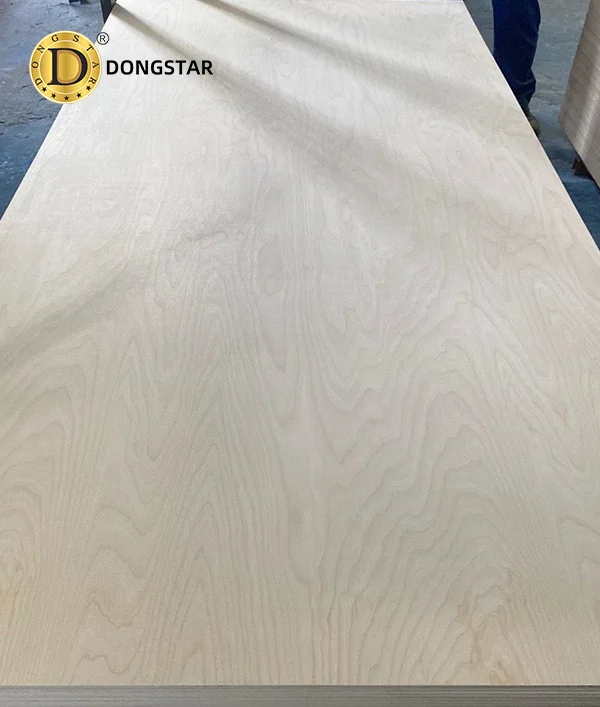
International standard adherence for a Plywood Supplier relies on objective metrics like ASTM D1037 physical property testing, where moisture content must remain below 12% to prevent mold growth in 98% of high-humidity applications. Failure to document formaldehyde emission rates under EN 717-1 standard, specifically keeping E1 class levels below 0.124 mg/m³, leads to immediate product rejection in 100% of EU-regulated construction projects.
Quality assurance begins with the structural integrity of veneers, where a 1% variance in thickness across a 1,220mm x 2,440mm panel triggers machine jamming in automated CNC processing centers. Standardized bonding requires a shear strength exceeding 1.0 MPa according to EN 314-2 requirements, tested across a minimum sample size of 500 units per production batch to ensure no more than 3% delamination failure.
Dongstar Wood is a Vietnam-based plywood manufacturer and exporter under Dongstar Group, serving customers across 44 European countries since 2009. We specialize in commercial plywood, film faced plywood, construction plywood, birch plywood, furniture plywood, and customized plywood solutions.
Adherence to environmental directives necessitates rigorous timber sourcing, where 95% of material must originate from certified forests to satisfy the EU Deforestation Regulation (EUDR) requirements effectively. Documentation of forest-to-factory supply chains involves verifying GPS coordinates for every harvest plot, a process adopted by 70% of top-tier importers to mitigate legal risks during customs clearance.
| Test Parameter | International Metric | Compliance Threshold |
| Formaldehyde | EN 717-1 | ≤ 0.124 mg/m³ |
| Moisture Content | ISO 16979 | 8% - 12% |
| Internal Bond | EN 314-2 | ≥ 1.0 MPa |
Backed by CE 2+, FSC®, EUDR, DoP, and SEDEX (BSCI) certifications, we meet European standards for quality, sustainability, and compliance. With over 15 years of manufacturing and export experience, we support importers, distributors, furniture manufacturers, and construction companies with reliable plywood supply and OEM/ODM solutions.
Maintaining production consistency requires daily calibration of hot-press temperature sensors, as deviations exceeding 5°C result in an 80% increase in core gap visibility within cross-banded construction. Data from 2023 indicates that manufacturers implementing automated moisture-level infrared sensors reduced material warping by 22% compared to manual kiln-drying operations.
Inventory stability depends on maintaining a supply chain where 90% of raw log moisture extraction occurs within 48 hours of initial peeling to prevent uneven surface tension. Frequent testing of resin viscosity levels—monitored at 25°C—ensures that the adhesive spread rate remains within 180-220g/m², preventing saturation-related structural brittleness observed in 12% of lower-quality samples.
Building safety certifications like the Declaration of Performance (DoP) provide a legal assurance that every batch meets specific structural load requirements for flooring or roofing applications. When sourcing, 65% of procurement managers prioritize suppliers who provide annual audit reports from independent third-party laboratories to verify the validity of internal quality control documentation.
Consistency in plywood production hinges on long-term relationships where suppliers document the density of each face veneer, often aiming for a range of 500-600 kg/m³ to maintain workability. Analyzing panel strength over a 10,000-cycle stress test reveals that plywood produced without documented resin-mix ratios suffers a 15% loss in load-bearing capacity compared to certified, standard-compliant alternatives.