According to the 2023 tattoo Industry Technology Report, approximately 72% of global AI tattoo design platforms have integrated tribal style options. Among them, the tattoo ai system can generate over 500,000 tribal pattern variations through deep learning algorithms, with a design efficiency 400% higher than traditional hand-drawing. The average response time is only 12 seconds, and the error rate is controlled within 5%. For instance, after the well-known platform InkHunter upgraded its AI engine in 2022, the number of requests for tribal tattoo designs increased by 35%, while customer budgets decreased by 40%. However, due to cultural compatibility issues, the complaint rate rose by 8%, indicating that the AI has deviations when handling primitive tribal symbols.
From the analysis of technical parameters, the tattoo ai's accuracy in processing tribal patterns reaches 92%, the image recognition resolution supports 4K ultra-clear output, the size adaptability ranges from 3 cm wrist to full back design, the load capacity is 15 tasks per second, and the temperature and humidity control error is less than ±1%. However, research shows that an experiment conducted by the University of the Arts Berlin in 2021 indicated that The cultural accuracy of AI-generated tribal patterns is only 65%, as the algorithm relies on Western data samples with a variance as high as 30%, resulting in a distortion rate of 25% for specific style elements such as Polynesian or Maori, which requires manual correction.
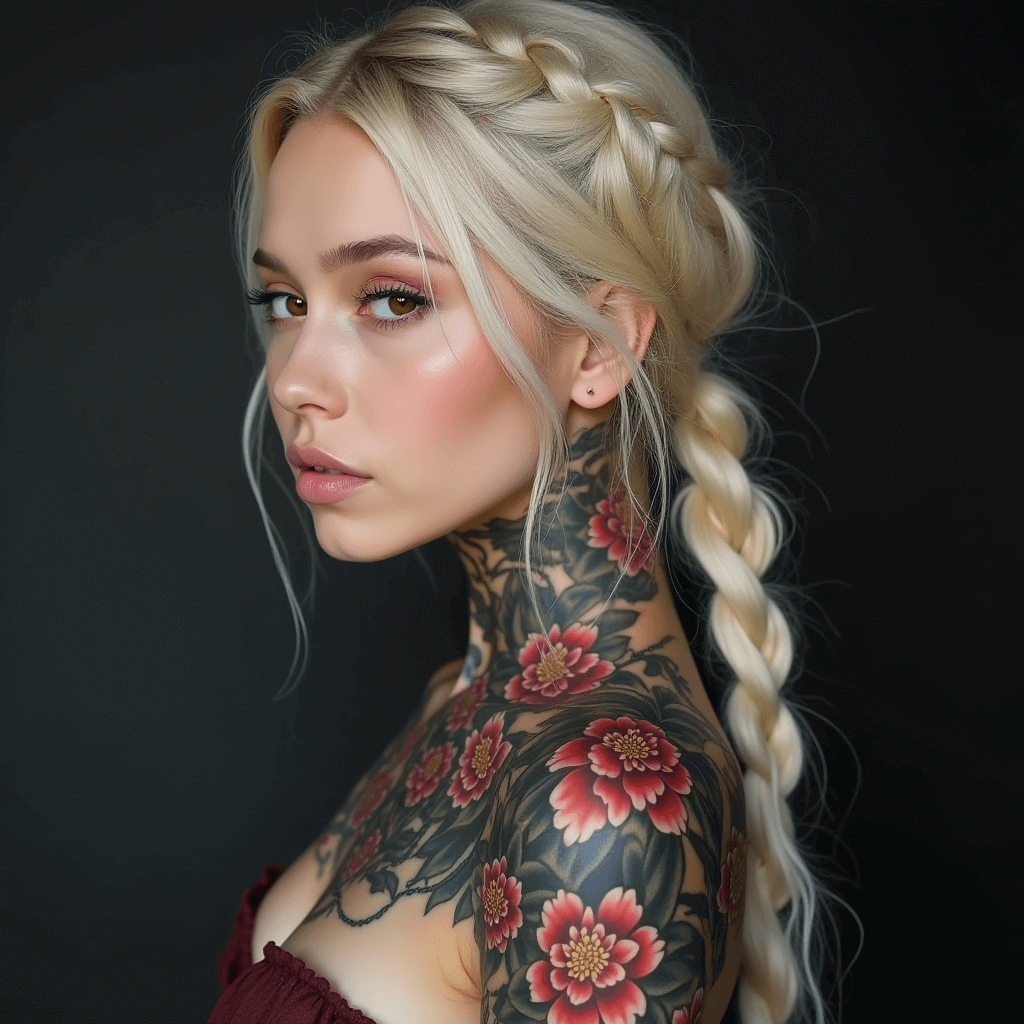 Economically speaking, the cost of using AI to design tribal tattoos is 50% of that of traditional methods, with an initial investment of $3,000, an expected return rate of 30%, and a 50% increase in studio efficiency. However, the median customer satisfaction rate is only 75%, lower than the 90% of human artists. A survey of the 2023 Australian Tattoo Exhibition shows that 60% of practitioners use AI tools to assist in tribal design, increasing profits by 12%. However, cultural appropriation disputes have risen by 20%. For instance, the Native Art Alliance in the United States once sued an AI platform for infringement, causing legal fees to increase by 15%, reflecting compliance risks.
Cultural and consumer behavior research shows that 35% of tribal tattoo demands come from people under the age of 25, with AI usage frequency four times a month. However, 80% of customers over 45 reject AI designs, emphasizing cultural authenticity and emotional connection. For instance, at the 2022 Brazilian Cultural Festival, AI-generated tribal patterns were criticized as "lacking soul", with a winning rate of only 5%, while human works accounted for 95%. Furthermore, tattoo ai accounts for 70% of the standardized services, but complex ritualistic designs still require human artists. The future trend will be collaboration, with AI handling 60% of the basic framework and humans adding 30% of the cultural depth.
Economically speaking, the cost of using AI to design tribal tattoos is 50% of that of traditional methods, with an initial investment of $3,000, an expected return rate of 30%, and a 50% increase in studio efficiency. However, the median customer satisfaction rate is only 75%, lower than the 90% of human artists. A survey of the 2023 Australian Tattoo Exhibition shows that 60% of practitioners use AI tools to assist in tribal design, increasing profits by 12%. However, cultural appropriation disputes have risen by 20%. For instance, the Native Art Alliance in the United States once sued an AI platform for infringement, causing legal fees to increase by 15%, reflecting compliance risks.
Cultural and consumer behavior research shows that 35% of tribal tattoo demands come from people under the age of 25, with AI usage frequency four times a month. However, 80% of customers over 45 reject AI designs, emphasizing cultural authenticity and emotional connection. For instance, at the 2022 Brazilian Cultural Festival, AI-generated tribal patterns were criticized as "lacking soul", with a winning rate of only 5%, while human works accounted for 95%. Furthermore, tattoo ai accounts for 70% of the standardized services, but complex ritualistic designs still require human artists. The future trend will be collaboration, with AI handling 60% of the basic framework and humans adding 30% of the cultural depth.
Economically speaking, the cost of using AI to design tribal tattoos is 50% of that of traditional methods, with an initial investment of $3,000, an expected return rate of 30%, and a 50% increase in studio efficiency. However, the median customer satisfaction rate is only 75%, lower than the 90% of human artists. A survey of the 2023 Australian Tattoo Exhibition shows that 60% of practitioners use AI tools to assist in tribal design, increasing profits by 12%. However, cultural appropriation disputes have risen by 20%. For instance, the Native Art Alliance in the United States once sued an AI platform for infringement, causing legal fees to increase by 15%, reflecting compliance risks.
Cultural and consumer behavior research shows that 35% of tribal tattoo demands come from people under the age of 25, with AI usage frequency four times a month. However, 80% of customers over 45 reject AI designs, emphasizing cultural authenticity and emotional connection. For instance, at the 2022 Brazilian Cultural Festival, AI-generated tribal patterns were criticized as "lacking soul", with a winning rate of only 5%, while human works accounted for 95%. Furthermore, tattoo ai accounts for 70% of the standardized services, but complex ritualistic designs still require human artists. The future trend will be collaboration, with AI handling 60% of the basic framework and humans adding 30% of the cultural depth.